The story of how unspeakably cruel, unaccountable, intentionally unnamed staff at Massey University's Companion Animal 'Hospital' repeatedly overdosed, abused, tortured, covertly converted private property (my pet) to a University "educational" resource to produce twisted student films on cell phones , while plotting to deceive me, Jordan Kelly, into believing a false sudden "neurological event/decline" diagnosis to coerce me into signing papers for my beloved little papillon, Harry's, immediate "euthanasia" , has now reached all corners of the globe and every shore and region of New Zealand. So too has the corrupt relationship between the national industry "regulator" (so-called), the Veterinary Council of New Zealand, and Massey University, as the two interlinked organisations have scrambled to rely on the same old tactics and strategies that have worked seamlessly for them for decades . . . to see them arrogantly and summarily dismiss complaints from pet owners - one after the other, after the other, after the other. Neither organisation nor the broader cast of characters involved in this sordid ordeal bargained on coming up against Harry's owner, however. None of them bargained on this owner's love and dedication to her beloved little Harry. None of them bargained on this pet owner's unwavering tenacity and investigative chops. And certainly none of them bargained on the entire series of articles this owner has now produced (and is yet to produce) - both across this public ation and in the newly-launched International Institute for Improvement in Veterinary Ethics. But most of all, none of them bargained for the international, and full-scale national, deep-dive readership I'm sure, by now, they've heard through their various channels, they're receiving. Daily. Increasingly. Obsessively. Those readers - the ones that aren't monitoring institutions, regulators and veterinary sector participants, but rather are my fellow pet parents - care deeply about what happened to Harry (because they've expressed it in submissions through this website), and they most certainly care about their own pets and educating themselves to ensure against any fate even approaching Harry's, from befalling them. It's for me, for them, and for Harry, that I hereby publish my response to the belated, buried, and begrudging Veterinary Council of New Zealand's (VCNZ) offer to source the names of those involved in the matter, from the recalcitrant Massey University. If this matter were continued under cover of darkness, as both the VCNZ, and the " leadership " and staff of its veterinary teaching facility (the facility they have the gall to misname "Companion Animal Hospital") would vehemently prefer it was, it would get no further than the 1.5% ( not a typo, that's one point five percent) of complaints that ever make it through the VCNZ "process" to any form of resolution (which probably isn't much, anyway). So in the interests of shining light into dark and seedy corners of New Zealand's veterinary sector, here's my March 29 letter to Liam Shields, the VCNZ's Deputy Registrar, in response to his March 19 cover letter that accompanied the Privacy Act information disclosure he and his CEO, Iain McLachlan, gave up only through legal obligation . . . and that, as you will read is, even so, both redacted and incomplete. March 29, 2026 To: VCNZ Deputy Registrar, Liam Shields Dear Mr Shields Thank you for your letter of March 19, 2026 and the accompanying Privacy Act disclosure. On your offer to assist with the provision of names and position titles: In response to your offer to source the names and position titles of all involved parties, I accept – with the requirement that this be a complete and unredacted list, not a partial or selective one . Specifically, and as a matter of primary urgency, I require the unredacted names and professional roles of every individual at Massey University who had any involvement whatsoever with Harry Kelly – including but not limited to: Every clinician, intern, student, and support staff member involved in his "care", “treatment”, handling and any and all associated decision-making processes, during the period of November 30 and December 1, 2025. The above category of requirement must include the licensed veterinarians that (a) the rotating intern, "Dr" Stephanie Rigg ( who misrepresented herself to me as a seasoned, senior veterinarian ), should have been supervised by, and (b) the licensed practitioner that was or should have been responsible for the intaking staff member (who I am advised by another aggrieved client of the facility - but whom is too frightened to speak out themselves because of Dean Jon Huxley's legal threat to me for doing so ) also bears the name of "Stephanie". It should be noted that I was almost certain at the time that she (the very young "Stephanie" i.e. her name was not known to me at the time) was lying when she assured me she was a graduated and fully qualified veterinarian in her own right. Given what I know now about the lack of experience and ethics with which the Companion Animal "Hospital" is staffed, I am even closer to being fully convinced that she was not a qualified vet, but rather, still a student. As I had commented in my published article , 'Massey Vet Teaching Hospital: Where Empathy Goes to Die' , this staff member looked barely old enough to have been out of high school, was clearly out of her depth, and not only had no authority over the two ICU attendants (who were engaged in social conversation and refusing any attention to Harry as he stood up in his cage screaming in terror with his legs dangerously, especially for a blind dog, outstretched through the grid of the cage door ), and despite my pleas, refused to exercise any authority over these ICU staff. In retrospect, it would seem now that this very young woman was not in a position of qualified authority to do so. Clearly, Practice Manager Pauline Nijman has at least conjoint responsibility for staffing rosters, but there must also be - in a veterinary teaching establishment - present, direct reporting chains in place at all times. If this was not the case during Harry's admission and time in the "ICU" facility, then the two licensed practitioners bearing ultimate responsibility for this failure (including its obvious systemic nature) would be Jon Huxley, the Dean of the Veterinary School , and Jenny Weston, the Dean of Massey's Veterinary Teaching Program . I place particular emphasis on this point purely because - given the Veterinary Council's already-demonstrated protectionism towards, and degree of collusion with, Massey University, its leadership and its staff - I firmly believe that you will take the opportunity to disingenuously optimise every possible technicality to avoid accountability for as many staff as you can. Every individual involved in the selection or administration of any drug or substance to Harry Kelly during that period, whether authorised, and whether documented / recorded, or otherwise . The "undocumented" and "unrecorded" element of this requirement is especially important, given Massey's continued refusal to release the Controlled Drugs Register and, in fact, its outright breach of the complete Official Information Act request of which this was a key part. To be noted, and as I made clear to Massey, I have asked for this critical document due to the demonstrable difference in Harry's condition showing between the multiple covert student videos taken of him on cell phones that morning (in outright contempt for my firm verbal and written instructions to Practice Manager, Pauline Nijman, and on forms, that Harry should NEVER be used as a training tool ) and when he was presented to me some six hours later with the ( what I now know to be just an intern's ) demand that he be "euthanased" (and the fact that the "Clinical Summary" records his last (unnecessary contraindicated sedative over)dose as having been at 9am (i.e. 1.5 hours prior to the student activity for which he was obviously further catastrophically sedated and permanently disconnected from his critical IV fluids). Every individual involved in, present during, or who authorised or participated in any filming or recording of Harry Kelly during his time in the Massey facility. Every individual involved in making, documenting, or communicating the bogus “neurological” diagnosis (that has been clearly demonstrated to have been bogus ) used to coerce his “euthanasia ”. (So as to avoid my inadvertently creating a opportunisable loophole either for you or for Massey, you should include the alternative term that will have been used in the official narrative no doubt framed for your benefit and for his, by the compromised Veterinary School Dean Jon Huxley i.e. "recommended" "euthanasia".) Every individual involved in the decision to push for the “euthanasia” of Harry Kelly, and in the carrying out of that “euthanasia”. Every individual involved in the handling of Harry Kelly's body following his death ( achieved by way of abuse, scheme and deception ) on December 1, 2025. Every individual involved in the creation of, adding to, alteration of, falsification or scrubbing of Harry Kelly's clinical and financial records , specifically including but not limited to: · The Clinical Summary ( the broader contents and claims of which, it should be noted, are inconsistent with (a) the facts, (b) prior records, and (c) logic (including between one part thereof and another, and have clearly been altered and added to posthumously) – in which a false neurological diagnosis narrative was constructed to justify the coerced "euthanasia" . (To be noted, this is not the only false inclusion in this "Summary" document .) · The Patient Change Log (Field-Level Audit) – in which the recorded time of death (false in its own right) was subsequently manually overwritten with 0:00, in a deliberate act of forensic scrubbing to eliminate the timestamp from any future audit or investigation. · The Euthanasia Authorisation form – pre-typed before my arrival at the facility and prior to any decision I was prepared to make , bearing timestamps inconsistent with the Patient Change Log. · Billing Record 636969 – in which a billable quantity was manually inflated from 1.6 to 4.0 units at 16:56 on December 1, 2025 – two minutes after the falsified time of death – and further manipulated through to approximately 19:20 on the same date. · The simultaneous triggering of both "Deceased" and "Discharge" status entries in the clinical records management system – mutually exclusive administrative statuses whose concurrent activation constitutes a documented administrative collision revealing the fraudulent closure of a live patient's file i.e. in a frenzied rush to avoid the new incoming night shift staff from questioning or investigating the day's events. · The manual "data scrub" of December 3, 2025 – performed two days after Harry Kelly's death by an individual with high-level system access, deliberately overwriting forensic evidence to obstruct any future audit, investigation or legal proceedings. All of the above conduct is the subject of Police Report OR-2484821N and engages Sections 258 (altering a document with intent to deceive), 260 (falsifying registers) and 219 (theft by conversion) of the Crimes Act 1961 (updated as part of the Crimes Amendment Act 2003). I note that Privacy Act 2020 Principle 11(e) permits this disclosure in order to uphold a statutory regulatory process, and that Massey's blanket redaction of all clinician identities is being utilised to subvert my right to file a VCNZ complaint . I further note that a Senior Standards and Advice Officer and Solicitor at the Royal College of Veterinary Surgeons (UK) - an accrediting organisation of Massey - has confirmed in writing that veterinarians are expected to provide their names to clients so as not to prevent them from raising a conduct concern. This is an obligation that applies regardless of whether the individual is employed by a university or a private practice. On the Apparent Glitch In Your Correspondence I note that the Privacy Act disclosure includes email correspondence between Massey University and the VCNZ — specifically, a private email from Massey's Dean of Veterinary Science, Jon Huxley, to VCNZ leadership, characterising my complaint as "wholly unfounded" before any investigation has been conducted, and ending with a friendly invitation for you to contact him for his, i.e. the apparently official, version. Your letter makes no reference whatsoever to the VCNZ's response to receiving that email, either at the time of receipt or in the period since. Quite frankly, it would be a naive individual who would believe that you and/or your CEO, Iain McLachlan, and/or your point of direct connectivity between the two organisations, Seton Butler, didn't respond to - and, far more likely, enter into communication with - Dean Jon Huxley as a result of receiving that email ( signed " Jon " ) from him. I require a full account of the actions the VCNZ took upon receiving Dean Huxley's private communication, who else received it, and all subsequent communications and related discussions and decisions - which, I suspect, included the two anonymous parties with whom you and your VCNZ colleague, Jamie Shanks, discussed me and the matter, but refuse to disclose any details thereof. On the Redacted Microsoft Teams Message I challenge your refusal to disclose the content of, and the parties to or discussed during, the Microsoft Teams message/s between yourself and Jamie Shanks. You have redacted the names of two individuals on the basis of section 53(b)(i). However, given that at the time of that communication you had not assisted me with the provision of names (and still have not) nor in any other way helped me with submitting a complaint (and still have not) - and therefore had no complaint formally before you (and still have not) - I require to know: who were you discussing me with, in what capacity, for what purpose, and on whose instruction? I would appreciate the full name, role, purpose and nature of the communications involving those undisclosed individuals and the undisclosed content of the associated discussions. I am considering a complaint to the Office of the Privacy Commissioner regarding your refusal to disclose what is likely a communication or communications central to the likely compromised and collusive nature in which you intend to avoid, refuse, frame, conduct or dismiss my forthcoming complaints. On the Internal Contradiction In Your Letter Regarding Conflicts of Interest Your letter contains a direct contradiction. In your paragraph 11 you state that Professor Jenny Weston "has no involvement with CAC (Complaints Assessment Committee) investigations and decision-making." Yet, in your paragraph 12 you state that "the Council are legally required to review all CAC decisions". Professor Weston sits on the Council. Therefore Professor Weston is involved in reviewing CAC decisions - including any decision relating to my complaint about Massey University i.e. the institution whose veterinary academic program she directs. Just saying, Mr Shields. On Your Suggestion That I Contact Massey University for Assistance Am I to interpret this as outright contempt, or gaslighting, or both, Mr Shields? I do not believe that, at this stage, you are ignorant of Massey’s refusal to provide the names of the parties required for me to lay complaints with the Veterinary Council. I do not believe that, since you have been copied in on two months of repeated, multi-angled, fervent requests to Massey , which - as you know, and as you know I know - is obligated legally, morally, and by international “best practice” standards to provide these (and not to have blacked them all out, in the first instance, from the subset of records I have managed to extract), as well as in accordance with New Zealand's Privacy Act 2020 and the Official Information Act 1982 . . . the instruments of our country's law through which I have so far unsuccessfully sought their release. I also do not believe you are ignorant of all the associated coverage on this website that details every minute aspect of this situation and its current status, Mr Shields. And if you are, it is to your shame, Mr Shields, given the gravity of the matter, including each and every individual, reported aspect thereof. Further, I do not believe I need to explain to the Deputy Registrar of the VCNZ why directing a complainant back to the demonstrably obstructive source entity of their complaint for assistance is entirely inconsistent with VCNZ's stated mandate of "having timely and transparent processes" and "upholding veterinary standards to protect people and animals". On Massey University's Ongoing OIA Non-Compliance Additionally, Mr Shields - since you are now, belatedly, offering - yes, there is something else you could absolutely assist me with. As you know and further to the above, the Official Information Act 1982 is the cornerstone legislation governing the mandated release of information held by publicly-funded institutions in New Zealand. It is an errant institution, contemptuous indeed of New Zealand law, that thumbs its nose at its OIA obligations . . . which, as you know, and as stressed above, is exactly what Massey University has done. I am still waiting for any communication regarding my OIA request that was due on March 13, 2026. Given your close relationship with Massey, and your no doubt desire to assist me proceed in a timely manner with the laying of multiple complaints - in keeping with the VCNZ's own stated objectives of "upholding veterinary standards to protect people and animals", "having timely and transparent processes", and its vision for "Aotearoa to have the world's most trusted veterinary profession" - I would expect you to be most amenable to urging Massey to act in a manner conducive to those objectives. As a reminder of the information I await from Massey - all directly relevant to the content of the complaints that need to be formulated for your organisation - the outstanding OIA items include but are certainly not limited to ( the below is excerpted from the OIA request also published here , as you’re of course, already aware): 1. Identity of Clinicians: The unredacted names and professional roles of all staff involved in the "care", treatment, and handling in any way of Harry Kelly during the November 30 and December 1, 2025 period, and also in the period following his death on December 1, 2025, including all staff involved in the handling of his body. 2. Conflict of Interest Disclosures (Seton Butler) : All internal records, disclosures, and management plans regarding Seton Butler's dual role as a Massey University Adjunct Lecturer and his professional advisory role at the VCNZ - and all communications of any type relating to Jordan Kelly or Harry Kelly. (**I DO BELIEVE THESE SHOULD HAVE BEEN INCLUDED IN YOUR OWN PRIVACY ACT DISCLOSURE PACKAGE TO ME, BUT WERE NOT.**) 3. Instructional Content Authorisation : All internal documentation, ethics committee approvals, or funding agreements related to the production of "instructional content" or clinical studies in the ICU or any other part of Massey University and/or its Companion Animal Hospital during the period of Harry Kelly's admission, and including while his body was in Massey's possession. 4. Pet Farewells Communications: All communications with Pet Farewells regarding Harry Kelly and Jordan Kelly. Specifically, not a general commentary. 5. Post-Mortem Activity : Disclosure of whether or not an unauthorised post-mortem was performed on Harry Kelly. 6. Controlled Drugs Register: All entries in the Controlled Drugs Register pursuant to the Medicines Act 1981 and the Misuse of Drugs Act 1975, as they relate to the dispensing, administration, or recording of any controlled or prescription substance administered to Harry Kelly during November 30 and December 1, 2025, or to his remains. 7. Patient Record Access Log and Audit Trail : The unredacted Field-Level Audit Log and all associated system access logs identifying every staff member who accessed, viewed, created, amended, "updated" or deleted any entry in Harry Kelly's electronic patient record from November 30, 2025, to the date of Massey's response. 8. Conflict of Interest Disclosures (Jenny Weston) : All internal records, disclosures, and management plans regarding Dr Jenny Weston's dual role as Massey University Academic Program Director and her ex officio VCNZ membership - and all communications of any type relating to Jordan Kelly or Harry Kelly. 9. ICU Video Footage of Harry Kelly: The release in full of all video footage taken of Harry Kelly during his ICU admission on November 30 and December 1, 2025, and any taken after his death. Massey's previous refusal to release the footage in full is not considered adequate compliance and is not accepted. In Conclusion, Mr Shields I remain deeply concerned about the VCNZ's refusal to perform its mandated role, and about the appalling complaint uphold rate documented in the VCNZ's own published research - co-authored previously by Professor Weston herself - which recorded that, over a 24-year period, 67.2% of complaints were either not investigated at all or were dismissed outright, with a mere 1.5% upheld, and only then, on technical competency grounds . Combined with the unashamed reticence you have shown with regard to facilitating this egregious complaint (and regarding which your March 19 email directs me to your website to fill out a form regarding), I intend to hold the Veterinary Council of New Zealand publicly accountable for a transparent process in this particular case. When a veterinary "hospital" and its staff overdose , abuse, torture, conduct twisted student activities upon while in a state of the pharmacological collapse they have induced him into, intentionally engineer his most unnecessary death , and coerce me under false diagnosis to not only consenting to my dog's traumatic killing but having to equally traumatically participate in it , I tend to take the matter rather personally . As quite a large proportion of pet owners, in fact, would. Between The Customer & The Constituent NZ and the International Institute for Improvement in Veterinary Ethics , this case is being read by a New Zealand audience spanning from Invercargill to Northland, and internationally across the United Kingdom, Scandinavia, the United States, Australia, Singapore, Hong Kong, Indonesia and South Africa. Regulatory bodies in several of those jurisdictions have been formally notified and are actively monitoring developments. This will be your opportunity to demonstrate that the Veterinary Council of New Zealand is capable of executing its regulatory duties in an ethical, honest and responsible manner. Or not. I look forward to receiving the complete list of names and position titles so that I can proceed with formal complaints against each relevant individual. One Last Point of Note, Regarding VCNZ's Chief Executive Officer In closing, I note that your Chief Executive Officer, Mr Iain McLachlan, has had so little concern - other than what appears very much to be to protect Massey University, its veterinary facility and its personnel from accountability - that he has ignored the multiple communications on which he has been cc'd for months regarding this matter, and the many provisions of the Code of Professional Conduct for Veterinarians in New Zealand ("administered" by your own organisation) that Massey's veterinary "teaching hospital" is in clear and in arguable breach of ( per my January 17 article on The Customer & The Constituent and the Open Letter to him that I published alongside it ). He initially endeavoured to avoid having to respond to my request for the (albeit incomplete and redacted) information you have now provided when I initially asked for it under the Official Information Act and chose to decline that request, apparently hoping I wouldn't know I had a right to it under the Privacy Act. Now, in a statement of open contempt, he has flicked off to you the responsibility for "dealing" with me, which you are hoping to conclude by way of directing me to fill out a form on your website. And so, I would ask, if a matter of such gravity as is represented by the Harry Kelly case, is not worthy of your Chief Executive's attention, just how bad does a set of circumstances have to be, and how obviously systemic does it have to appear within an organisation (New Zealand's only veterinary "teaching" facility, no less) before it is considered one of serious concern to the Veterinary Council of New Zealand? Or is the answer to that reflected by the fact that only an inconceivable 1.5% of all complaints (notwithstanding those that are never made) to your Council are upheld . . . and only then, on grounds of "technical competency" . . . with no concern for any complaints where a compromise in ethics has played an obvious part? If none of this is of any concern to Mr Iain McLachlan, as the head of the Veterinary Council of New Zealand, it begs the question, what does Mr McLachlan do all day? Perhaps he spends his time drafting the Standards, aims and goals that your very actions and decisions are actively designed to ensure are never actually achieved. Yours sincerely Jordan Kelly Editor-in-Chief, The Customer & The Constituent NZ Executive Director, International Institute for Improvement in Veterinary Ethics (IIIVE)
Actually, Huxley, Notwithstanding That Their Loyalty to You and to Massey Prevents It, It's the VCNZ's JOB to 'Be Drawn Into It'. That's How They Get to See That It's Anything BUT A 'Wholly Unfounded Complaint'. It's Also More than Just A 'Complaint'. As You Have Long Since Known.
Editor’s Conclusion : Unsupervised. Unaccountable. Uninvestigated. And Still Accredited.

UPDATED: 16.3.26 Will This Badly Behaving Institution Finally Allow the Full Truth to Be Revealed? (16.3.26: MASSEY BREACHED ALL ITEMS ON THE BELOW OIA; TOTALLY IGNORED THEIR LEGAL OBLIGATIONS. NO COMMUNICATION. A HUGE NO-NO IN THE NZ CONSTITUTIONAL FRAMEWORK.)

Hidden in Plain Sight: Unashamed Conflicts of Interest to Make Your Head Spin
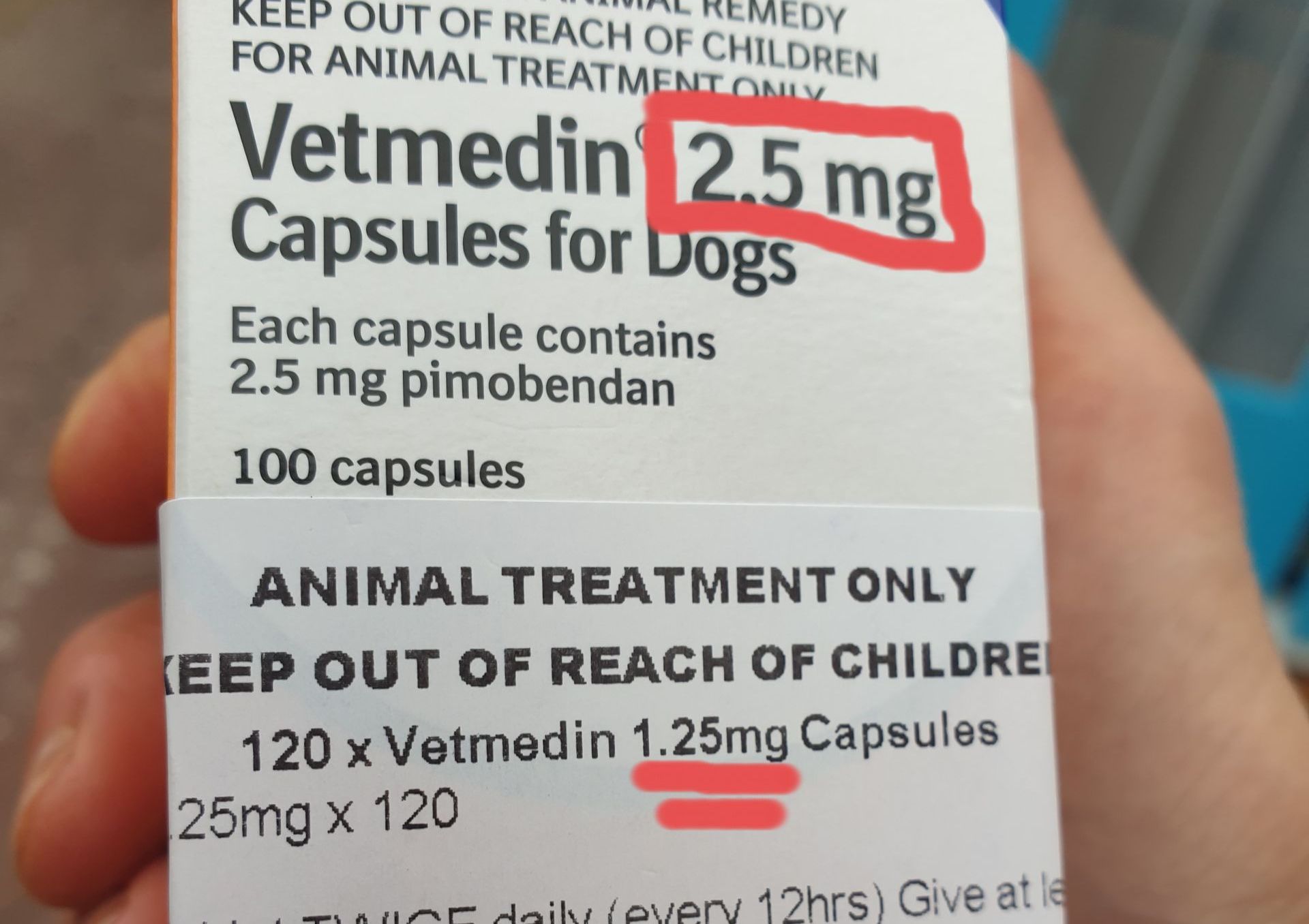
Time for Change : New Zealand's Pet Parents Say NO MORE to the Poor Standards, Compromised Care & Outright Contempt We Put Up With from the 'Products' of the Massey Veterinary Degree Factory
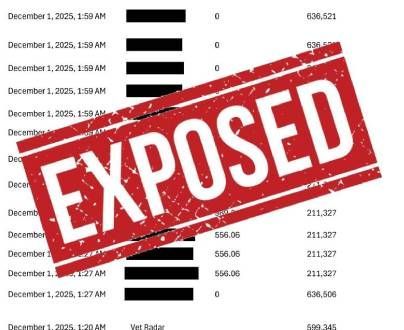
Readers following the coverage of my attempts to get to the bottom of what happened to my beloved little papillon, Harry, with whom I was extraordinarily closely bonded, will know that: (A) The rot in Massey University’s Companion Animal “Hospital” (CAH) runs deep. (B) Honesty and transparency is not their policy. Denial, dismissal, stonewalling, legal threats and intimidation are. (C) Animals aren’t safe there, with cruelty embedded in “care”, and your property (as your pet legally is) not considered your property at all, as far as Massey, its CAH staff and management are concerned. Your pet is theirs ; to do with as they please, according to their mindset and their modus operandi. And if that involves catastrophic levels of unauthorised, contraindicated, convenience sedation to facilitate their use of your pet in monetised student video collections (including on private cell phones, and to which you will be given no access), this too, according to Massey, is its own God-given right and “best practice” Standard Operating Procedure. (D) “Informed Consent” has a very different meaning in the Massey playbook to that which is generally deemed its accepted definition. (E) “Accountability” is a foreign concept and not one with which they have any intention of becoming acquainted. (F) Laws – including those governing animal welfare, property conversion and more – are not only optional, in Massey’s case, they simply don’t apply. In fact, they appear blissfully ignorant of them according to my (and Harry's) experience. You know all that. You’ve read about it here , here , here , here , here , here , here , here and in most of my other now 30+ articles covering the numerous different sub-atrocities within the overall atrocity that was the demise and disposal of my precious little Harry. Actually, "atrocious" doesn't come anywhere near to being an adequate adjective. Despite having been a professional writer since I was 16 and having upwards of 25 published books under my belt, I don't actually have an adjective that's adequate for the pure evil that was perpetrated upon Harry . . . and, by extension, me . There is not one word or one phrase that can sufficiently convey the depth and breadth of the sheer, unadulterated wickedness that festers without restraint within the walls of Massey University's Companion Animal "Hospital". What you, my readers (or those of you not on Massey's massive legal team payroll) didn’t yet know – because I didn’t yet know – is that record and evidence tampering (which, for any other New Zealand citizen would attract jail time of up to 10 years under the Crimes Act 1961 Section 258 (Altering document with intent to deceive) or Section 260 (Falsifying registers) , and/or a $10,000 fine under the Privacy Act Section 212(2)(b) - appears also to be included in the “we’re exempt” culture of Massey and its veterinary “hospital” staff. Note to Readers: The above laws aren't some hypothetical, bottom-drawer, dusty old legal tracts in archaic library textbooks. They're real, "living" laws that apply to every individual in our country. And today, they are being made to apply to Dr Stephanie Rigg and her "colleagues" who falsified Harry's records to create a cover-up of what they did to him . . . and to me. I will, duly, see Dr Rigg and her associates in Court. Dissecting the Cover-Up: Massey’s Metadata of Deception But back to what readers do know for a moment: You’ll know that I’ve been in the battle of battles for the past two months to extract Harry’s full records (or anything approaching them) from Massey’s Legal and Governance department. HOWEVER . . . there was one thing I hadn’t known how to decipher that they actually had finally drip-fed to me. It was File Name: Patient Change Log (Field-Level Audit) . I’ve been learning a lot about veterinary science, record-keeping, and law in general lately. Not because I wanted to. But because if you want to figure out how deep the rot really runs at Massey, you kind of have to. So I’ve learned a bit about how to decipher clinical metadata. Just e nough to realise that this Patient Change Log (Field-Level Audit) is exactly where the digital fingerprints of a cover-up are hiding. Despite the fact that this document has as much redacted as it shows (probably more), with ALL staff names and positions blacked out, for example -I still found four distinct “smoking gun” entries in these otherwise heavily-redacted metadata logs. BIG. FAT. SMOKING. GUNS. that amounted to one undeniable overall conclusion: This document isn’t a clinical record so much as it’s a literal crime scene . There were already so many dodgy inconsistencies in the few items I'd managed to pull out of Massey to that point (as I've documented in various of my preceding articles). But this document is where, undeniably, the bodies are buried. You just need to know which clod of dirt to look under. Hidden in Plain Sight . . . In A Little Thing Called the Metadata (That the Average Pet Owner Wouldn't Even Know Existed ) There are four hidden but key findings demonstrating that the entire timeline of Harry’s “experience” in that hellhole were was orchestrated, and the sudden "neurological event/decline" exit strategy planned for him were a total fabrication. And that fabrication had a start time. (For this start time we will initially revert our focus back to Massey's previously-supplied "Clinical Summary" (in all its dodginess) . . . We will then lead from the immediately below into the afore-mentioned "Patient Change Log (Field-Level Audit)". Bear with me. I promise not to let this get boring). Well, one of two start times. Either: (1) The 8.38am disconnection of his (with, by-then, the TWO 750% overdoses of the renally contraindicated convenience sedative with which the "crying dog"-sensitive ICU staff had plied him overnight) now life-essential IV fluids (8.5 hours into the prescribed 24-hour protocol that they charged me for). And/or: (2) When the day shift ICU "vet" arrived at 9am and decided a THIRD 750% overdose would be a strategic way do deal with a clearly already massively overdosed little 3.8kg, 15-year-old, dehydrated dog. Now WHY would any vet take such a decision? Well, for legal purposes, of course (remembering that the Venerable Dean Jon Huxley and the obviously not- so-new-broom Vice-Chancellor Pierre Venter, have all the money in the public purse to pay their top-tier external legal counsel . . . and by gum, there are enough of the buggers, if this site's analytics are anything to be guided by), I will precede the following by stating that these are my conclusions, made on the basis of the collation and evaluation of the information before me. That said, what I know of my readers is this: You are no intellectual slouches. Feel free to let me know if you can come up with any other conclusion from the information (complete with now numerous "receipts") that I have thus far presented, most especially here and here , and most tellingly of all, in today's expose. R emember, though, I held the ultimate evidence in my arms at 6pm on December 1 . . . and, some 45 minutes later, I let them take it (safely, for them) away from me, just like Harry's (the literal body of evidence) life had just been taken from him. Little Numerals that Tell A BIG Story The plan for Harry's manufactured exit is not so much written into the records, as it is revealed by the tampering with the logs. They lay bare the lead vet’s apparent plan that his life would come to an abrupt end by the pre-scheduled time of (well, they couldn't quite get consistency in the logs regarding the exact minute, but by the absolute latest time of) 17:00 hours i.e. 5pm . . . assumedly, the end of the day shift on December 1. Just in time to mark him "Deceased" and seal off the records of this catastrophically overdosed patient, before the next shift came on, saw his records, and someone started asking the immediately necessary, and certainly appropriate, questions. And those questions would (0R SHOULD ) have included , but would certainly not have been limited to: How long has this dog been in this state? Why hasn't any rescue and remediation protocol been undertaken? Why was he given yet ANOTHER administration of 50mg of Gabapentin at 09:00 hours after the preceding two during night shift? Why is he disconnected from his IV fluids? Who approved that and why? (And if they knew he'd starred in a multi-video student film festival that morning): Was he taken out of his cage and handled in this state? When did he last drink? Was he given any food before he entered this near-comatose state? Does the owner know of the overdoses and the state he's in? Have you filled in an incident report? Have any emergency specialists been called in for advice? and, no doubt, many more questions. OR . . . maybe not. It depends if the rot in that ICU is fully immersive, or if it's concentrated on Dr Stephanie Rigg's day shift and the ICU shift staff of the preceding (November 30) night. But none of those questions could be asked and none of that could happen. The day shift - led by "Dr" Rigg ("Steffi") - wasn't about to let it happen. Thus, the pre-timestamped, just before end-of-shift, Time of Death entered into the "Euthanasia Authorisation" form that they had all queued up for me long before I ever arrived at that Godforsaken facility that fated December 1 afternoon.

Harry WAS A Marked Dog. I Had Hoped Massey Vet Staff Couldn't Have Been Any More Wicked Than They'd Already Been Caught Out Being. But YES , Actually, They COULD .
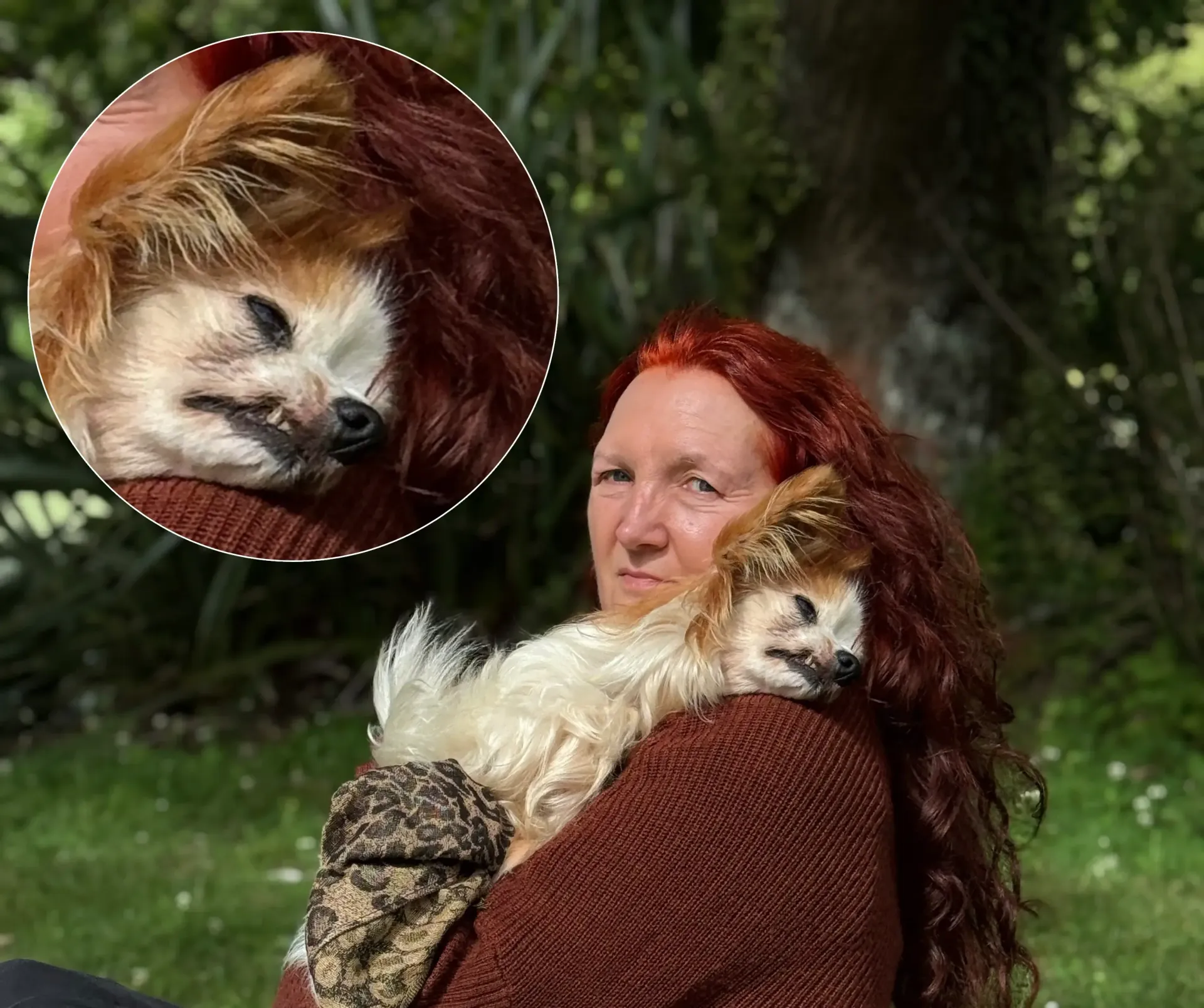
This Is What Happens When Massey Thinks THEY Own Your Dog & Can Do With Him As They Please (You Just Pay the Invoice) At This Appalling, Unaccountable Veterinary House of Horrors (LATEST PROOF OF 'LAB RAT' TREATMENT HERE )
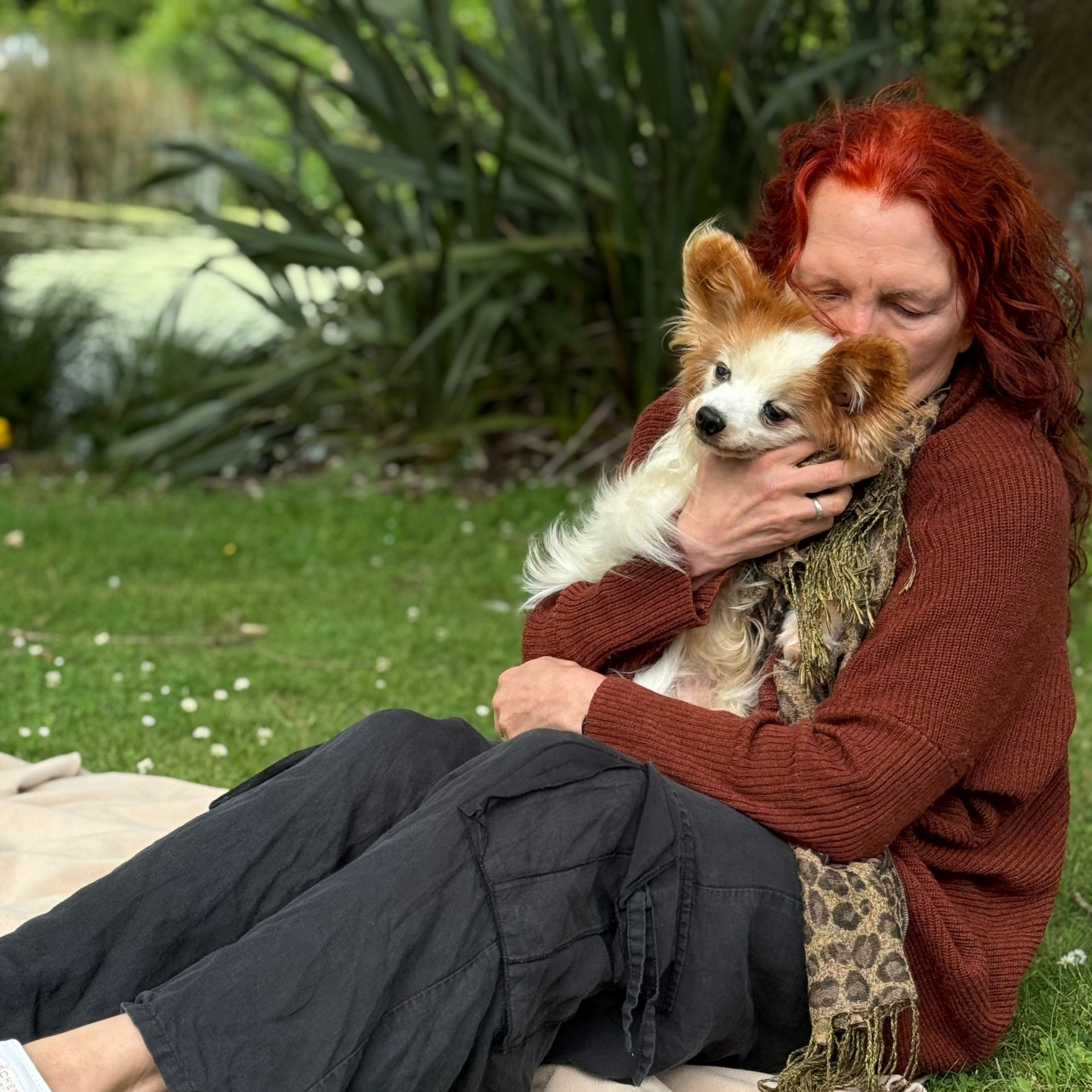
FOR LATEST INVESTIGATION FINDINGS: GO HERE . My Precious Little Boy Died Needlessly, In Intense Physical, Mental & Emotional Agony . . . After Massive Overdosing, Intense Cruelty & Intentionally False Diagnosis by Massey 'Vet' (So Called) to Enable His 'Disposal' After Lab Rat-Style Experimentation