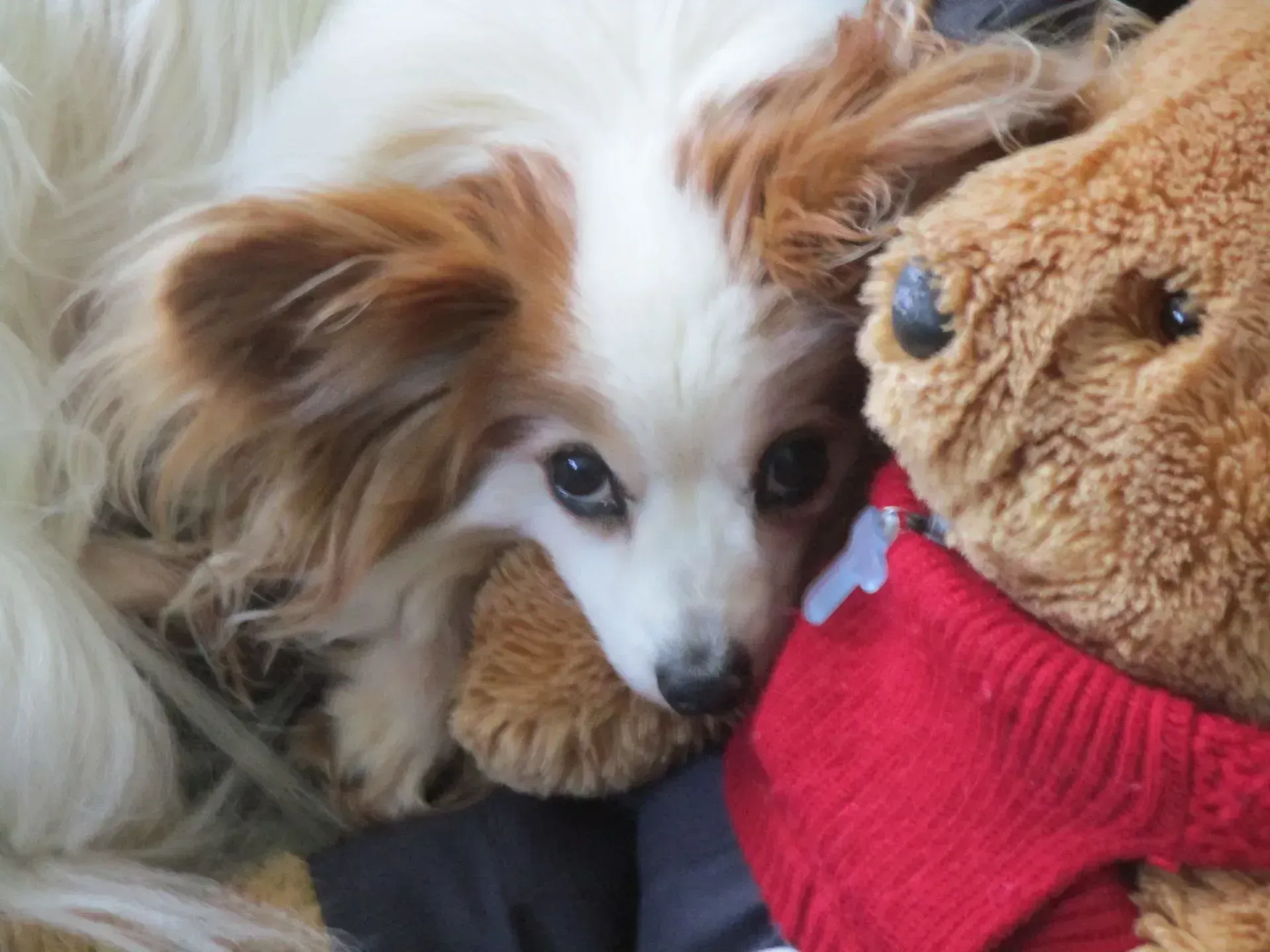
AVBC, AVMA & RCVS DIRECTORS: Is It OK With You That Pet Owners Can No Longer Trust the Veterinary 'Profession'?
Jordan Kelly • 18 June 2026

Bypassing Managerial Stonewalling at AVBC, AVMA & RCVS to Alert Accreditors' Directors of their Directorial Liability Obligations

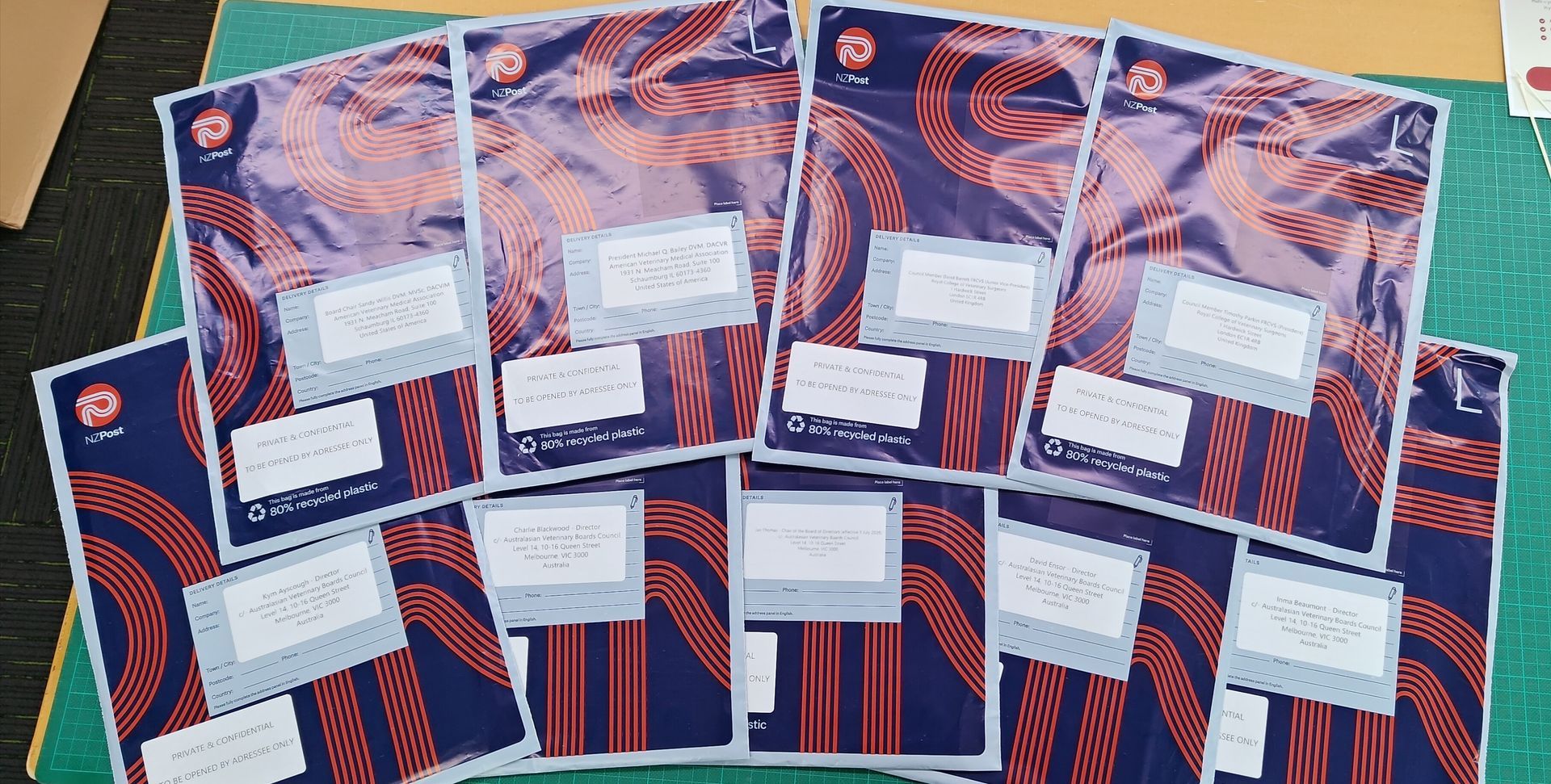
Above: With assistance reflective of reader and general public sentiment for the need to (a) hold Massey's management to account for the atrocities committed in the Harry Kelly case, and (b) call for investigations and actions to stop the institution's "Companion Animal Hospital" management and staff committing these atrocities on private clients' family pets, the management and several of the staff of the Masterton Paper Plus, Copy Centre and Post Shop personally downed tools yesterday to donate their expertise and support to the mission. (Special shout-out to Manager Richard and 2IC Callum.)


Over several intense hours, they re-laid-out and format-converted this week's internationally-distributed Media Release and Questions-to-VC-and-Dean articles as accompaniments to my letters to the nine lead Directors of the three agencies currently providing Massey with the undeserved international accreditations that Massey uses to attract student enrolments into this "educational" facility. They printed, collated, stapled, labeled, stuck, listed, Customs forms-filled, checked, re-checked and finally despatched these nine critical information-and-alert packages to their respective overseas destinations.


Meanwhile, by complete contrast, yet another anonymous cruel taunt from the Massey insider/s sat fresh in my inbox from 9.05am. (It's worth noting that I have published more than sufficient details for Massey management to readily identify this anon or small gaggle thereof, but Massey's "leadership" clearly chooses to allow them to persist, demonstrating, among other misfeasance, blatant disregard for the institution's Privacy Act 2020 obligations, with the sender/s having provided detailed demonstration of their direct access to Harry's Massey records.


Note to New Readers: 'Always the Latest' provides a continually updated entry point for the extensive and ongoing coverage of this Massey University atrocity . . . that could just as easily befall your own pet/s.

______________________________________________________


On June 18, 2026, the above nine individually addressed registered letters were dispatched by international courier from Masterton, New Zealand, to the as-named (see labels) directors of the three international bodies holding Massey University's veterinary accreditation — the Australasian Veterinary Boards Council (AVBC), the Royal College of Veterinary Surgeons (RCVS, UK), and the American Veterinary Medical Association (AVMA).


Each letter places its named recipient on formal personal notice of the Harry Kelly Case — the forensic investigation into the catastrophic and intentional sedative overdosings, fraudulent diagnoses by  Dr Anita Shea, aggressively coerced life termination under false pretences by Dr Steffi Jalava, conversion of a private client's pet  as a live specimen for multiple, invasive  hands-on student training exercises, records falsification (subject to an active Police report under NZ Crimes Act 1961), fraudulent invoicing practices overseen by Practice Manager Pauline Nijman, OIA non-compliances by Chief of Staff Jodie Banner (including over her evasion of the issue of who gives permission for the training resource use of clients' pets), Privacy Act breaches by anonymous staff emailers, nil chain-of-custody over Harry's remains, campaign of online torment  by staff or others with access to Harry's Massey records, and now, the active Ministry of Primary Industries' animal welfare investigation currently under way into the facility's operations.


And, of course, Veterinary School Dean Jon Huxley's threats to use the University's big-ticket legal services provider, Buddle Findlay, to gag me . . . and his collusion with the Chief Executive and "leadership" team of the Veterinary Council of New Zealand to prevent me from laying formal complaints, with what I can only logically interpret at this point as the new, incoming Vice-Chancellor's, Pierre Venter's, full, active and budgetary support.


The letters were sent to the following individuals:


⚠️ THE ENABLER IN CHIEF: IMMEDIATE PAST VICE-CHANCELLOR OF MASSEY UNIVERSITY, JAN THOMAS.


THE HARRY KELLY CASE ATROCITIES WERE COMMITTED ENTIRELY UNDER 'PROFESSOR' THOMAS'S WATCH . . . MEANTIME, IN ONE OF THE MOST EXTRAORDINARY AND OVERT DISPLAYS OF STRUCTURALLY-EMBEDDED CONFLICTS OF INTEREST, SHE IS NOW THE INCOMING CHAIRPERSON OF THE AUSTRALASIAN VETERINARY BOARDS COUNCIL (ONE OF THE THREE ACCREDITATION AGENCIES CURRENTLY TURNING A DOGGEDLY PERSISTENT WILFUL BLIND EYE TO THE MATTER).


Every single point of clinical fraud, severe animal cruelty, records manipulation, institutional stonewalling, and threatened gagging by use of the University's legal firm Buddle Findlay, as documented in this campaign, occurred directly under the governance and ultimate executive watch of immediate former Massey University Vice-Chancellor Professor Jan Thomas — who takes the position of AVBC Chair effective 1 July 2026.


Australasian Veterinary Boards Council (AVBC)


  • Jan Thomas — Chair of the Board of Directors (effective 1 July 2026; Vice-Chancellor of Massey University January 2017 – January 2026)
  • Charlie Blackwood — Director
  • David Ensor — Director
  • Inma Beaumont — Director
  • Kym Ayscough — Director


Royal College of Veterinary Surgeons (RCVS, UK)


  • Council Member Timothy Parkin FRCVS — President
  • Council Member David Barrett FRCVS — Junior Vice-President


American Veterinary Medical Association (AVMA)


  • President Michael Q. Bailey DVM, DACVR
  • Board Chair Sandy Willis DVM, MVSc, DACVIM


The letters follow below in full.

____________________


(Named Director)

c/- Australasian Veterinary Boards Council
Level 14, 10-16 Queen Street
Melbourne, VIC 3000
Australia


Dear (Named Director)


Formal Notification – Massey University Veterinary Teaching Hospital and ICU – Accreditation Review – Harry Kelly Case


I write to you in your capacities as directors of the Australasian Veterinary Boards Council, which has recently transitioned to a Company Limited by Guarantee. You accordingly carry personal directorial duties under Australian Corporations Law, including duties of care, diligence, and good faith, along with duties to act in the best interests of the organisation and to avoid conduct that may expose it to liability.


In publicly acknowledging this transition, the AVBC claims to have “helped build a system that supports high educational standards . . . and public confidence in the profession”, with a stated future focus of “stronger governance . . . and continuing to advance veterinary education in the public interest,” adding that “change in governance structures rarely makes headlines, but the impact these foundations have on professions, practitioners and communities is substantial.”


Active Expectations of Institutions You Accredit Must Align With Your Public Statements


I would draw to your attention the self-assessment of having made a positive impact on “advancing veterinary education” and on “communities”.


I would point out that when the pet-owning public and your clientele cannot trust you not to administer undisclosed and highly inappropriate pharmaceuticals to their pets at potentially lethal levels, and to then discontinue – yet charge them for – their specifically prescribed protocols in order to convert them for commercial usage as student training tools, and then fabricate diagnoses in order to ensure the evidence is neatly discarded . . . that this neither “advances veterinary education” nor does anything else to engender confidence in “communities” and those members of them who own pets and entrust them to your accredited institutions.


My letter today relates to serious cruelty, clinical and managerial misfeasance, clinical and other forms of fraud including criminal, at Massey University and its Veterinary Teaching Hospital, known to the pet-owning public as its “Companion Animal Hospital”.


The Harry Kelly Case


•    Cruelty and Neglect in ICU


•    Possible Operation of Overnight ICU Facilities without the Presence of Licensed Veterinarian (TBC)


•    Intentional Catastrophic, Repeated Overdosing with Contraindicated Sedatives


•    Refusal to Provide Emergency Corrective Treatment Following Potentially Lethal and Repeated Overdosing


•    Discontinuation of Prescribed & Paid Protocols


•    Fraudulent Examinations & False Diagnosis


•    Covert Conversion of Private Property As Owner-Unauthorised Hands-On Student Training Resource (And Against Repeated Owner Forbiddance)


•    Animal Cruelty


•    Inappropriate & Unsafe Use and Handling of Sedated Private Pet in Dangerous Manner


•    Withholding of Critical Information from Owner (Both Before Forced, Fraudulently-Achieved Death and Posthumously)


•    Coerced Termination Under False Pretences


•    Clinically Filthy, Reprehensible and Immoral Conduct of (Unnecessary and Coerced) Life Termination Procedure (Permission for which was obtained under false pretences)


•    Records Restrictions, Clinicians’ Identities Redactions, Records Falsifications and Tampering & Fraudulent Invoice Escalations


•    Non-Compliance with Official Information Act Requirements


•    Dean of School and Veterinary Council Leadership Collusion to Pervert Natural Justice


•    Multiple Points of Conflict of Interest


•    Legal Threats to Silence Complainant


I am the Editor-in-Chief of
The Customer & The Constituent NZ (www.thecustomer.co.nz) and Executive Director of the International Institute for Improvement in Veterinary Ethics (IIIVE) (www.iiive.org).


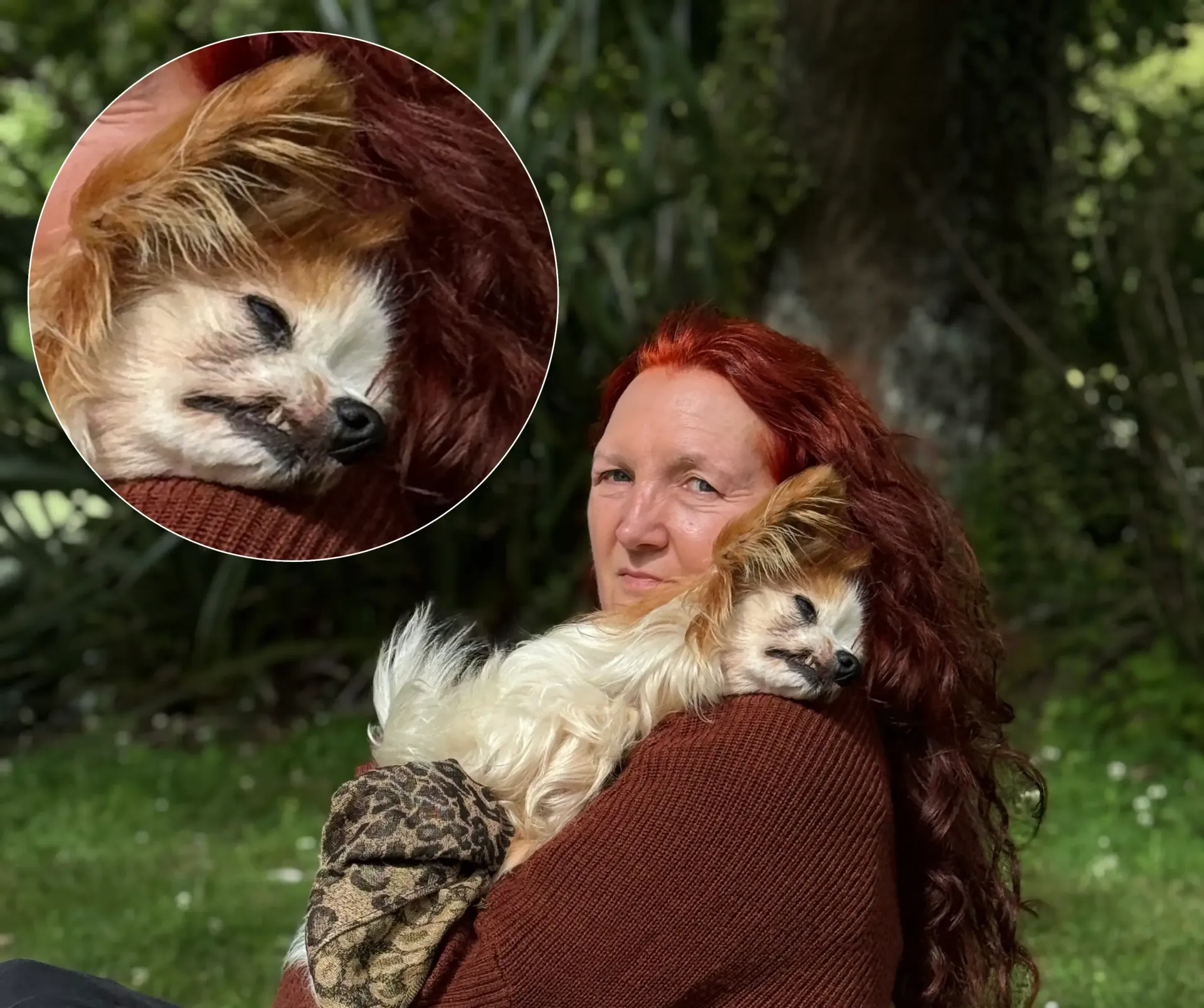
I am also the owner of Harry Kelly, a deeply loved and treasured blind papillon who was admitted to the afore-mentioned facility (accredited by AVBC), as a private, full fee-paying patient, for a 24-hour rehydration protocol, but was instead catastrophically and repeatedly overdosed with an unnecessary convenience sedative contraindicated for his specific condition (as clearly included in Massey’s own recent recorded records for him), then disconnected from that rehydration protocol after 8 hours and 38 minutes for commercialisation and utilisation by Massey’s Dr Steffi Maja Jalava in student teaching activities and video productions, with a false diagnosis produced by her in conjunction with “neurologist” Dr Anita Shea, who conducted (along with extensive student activities upon him in his catastrophically sedated state) a “neurological examination” on him while at the peak of his over-sedated state, and with a sedative, gabapentin, well-documented within international veterinary records as mimicking dementia and other neurological symptomology.


That false diagnosis along with surrounding fabrications by Dr Jalava were used in an intensive, lengthy coercion of me, as Harry’s doting owner, to agree to his immediate termination there at Massey – with no ability for me to have him seen by even his own primary vet. An external vet would not only have questioned his apparent “sudden neurological decline” against his clinical baseline of just 12 days earlier (which demonstrated no such condition, symptoms or diagnosis) but would, of course, have immediately recognised the reality of his horrifically over-sedated state. To be clear, no indication of the administration of any pharmaceuticals – much less sedation – had been disclosed to me by Jalava; with his sedated state misrepresented as some sudden neurological decline. My discovery, and cascading subsequent discoveries, resulted from my accessing an invoice that, while paid in full, was not shown to me at the time, but rather emailed to me after the fact. It was only then that my recognition and then forensic analysis of its component line items revealed the truth of the circumstances.


Key components of Harry’s back-of-house audit logs and related records have been manipulated by Massey personnel in acts that engage several sections of the New Zealand Crimes Act 1961 relating to fraud. Police reports have been filed.


Crimes Act 1961 Records Tampering & Perversion of Course of Justice


As a result of the continued refusal to release the identities of the full list of (or for six months, any) of the clinical staff involved in Harry’s case, and the active and demonstrated collusion between Veterinary School Dean Jon Huxley and Veterinary Council of New Zealand (VCNZ) Chief Executive, Mr Iain McLachlan (being a registered lawyer), McLachlan himself is now the subject of an active complaint with the Law Society of New Zealand.


The continued refusal to release the names of all personnel about whom I seek to lay complaints precludes my ability to lay such complaints with the VCNZ – with Massey and VCNZ management thus openly perverting the course of justice.


In my endeavours to seek accountability, I also have been met with continual delays and substantial redactions regarding the release of my pet’s veterinary records and other requested information, with these having been the subject of Legal and Governance inputs and removals. Similarly, Privacy Act and Official Information Act (OIA) obligations have been ignored, or reframed, or at best, only partially met.
 
AVBC Accredits this Institution . . . It’s Time to Assess & Review in the Interests of the Pet-Owning Public


Massey University holds AVBC accreditation. The AVBC is therefore among the bodies with formal governance responsibility for the standards under which that institution operates.


Clearly, with reference to your confidence in the Australasian Veterinary Board of Councils’ apparent significant contribution to the integrity of the profession and its protection of the pet-owning public, this is severely misplaced in at least this one case. However, indications are that this – although egregious in its own right – is not at all an isolated case.


Strong indications – including by basic, logical deduction alone – indicate a systemic foundational rot within this particular institution.


You Have Legally-Enforceable Directorial Duties:
Structural & Deep-Rooted Loyalties MUST be Resisted & Overcome


I do recognise that, with its role as the only veterinary curriculum of this type at any New Zealand university – and with the deeply interwoven loyalties a majority proportion of the veterinary sector undeniably has towards it, including as its Alma Mater – to deal with what I have exposed in my 60+ items of often forensic and evidence-supported coverage  on my two public platforms  will take substantial intestinal fortitude. This is particularly so in the almost certain significant peer pressure you will be under to avoid doing so.


Nonetheless, I draw your attention back to the directorial duties you now hold, under the new organisational structure you have opted to transition to.


On that specific note, I draw your attention to a structural conflict of interest of direct relevance to this board:


Professor Jan Thomas, who served as Vice-Chancellor of Massey University from January 2017 to January 2026 – the institution at the centre of the case I have outlined (i.e. the Harry Kelly case) – takes the position of Chair of this board effective 1 July 2026. Notwithstanding the tightknit veterinary sector at large, and also personal loyalties often operating within the appointees to Boards themselves, this would deem Professor Thomas in a position of direct conflict of interest over this case.


Numerous Attempts Made to Bring This Matter to the Attention of AVBC Management


I have made numerous attempts to alert the AVBC to this matter and its many aspects – all having been summarily dismissed. The AVBC was first notified on 6 March 2026, when admin@avbc.asn.au was copied on a statutory disclosure email sent to the Royal College of Veterinary Surgeons (UK) advising of serious, multiple breaches of accreditation standards, and also of record falsification, at Massey University.


A direct follow-up was sent to your Chief Executive Officer, Kate Simkovic, on 16 March 2026, with numerous subsequent attempts since. The earlier correspondence is included at https://www.iiive.org/massey-universitys-abuse-killing-of-harry-kelly-case-1. Subsequent correspondence has become too extensive to continue adding; itself an indication of how strenuously I have tried to bring this extremely grave matter to the attention of your organisation’s management.


Directorial Duties & Legal Requirements of Corporations Act 2001


Chapter 2D of the Corporations Act 2001 lays out the statutory duties for directors and corporate officers. It outlines personal liability mechanisms for failures in care, diligence, good faith, and proper purposes, establishing severe civil and criminal consequences.


Key Duties and Liabilities in Chapter 2D


•    Care and Diligence (Section 180):  Directors must act with the degree of care and diligence that a reasonable person would exercise in their position. (NB: This would, in the context of the AVBC, be interpretable as the requirement to ensure that those institutions upon which you bestow your accreditation must operate in alignment with your published Standards – and without exception.)


•    Good Faith and Proper Purpose (Section 181):  Directors and officers must exercise their powers in good faith in the best interests of the company, and for a proper purpose. (NB: This would, in the context of the AVBC, be interpretable as the avoidance of the influence of conflicts of interest that might result in the evasion of Care and Diligence (see above) or the influence of the way in which these Directorial Duties are exercised.)


•    Use of Position & Information (Sections 182-183):  Directors cannot improperly use their position or corporate information to gain an advantage for themselves or cause detriment to the corporation. (NB: This would, in the context of the AVBC,
be interpretable as wilfully allowing the compromise of the integrity of your bestowed accreditations.)


Consequences of Breach


Breaches of duties in Chapter 2D can result in significant consequences e.g. Civil Penalties including fines and management bans, and Criminal Charges (Section 184), applied in cases of dishonesty or recklessness regarding duties.


Enclosed with this Letter


•    The media release: ‘Massey Veterinary ICU’s Wild West Practices & Covert Use of Clients’ Pets As Live Teaching Specimens’ distributed internationally on 15 June 2026 to 59 media recipients across New Zealand, Australia, Singapore, Malaysia, China, the United Kingdom, and the United States, and published on both www.thecustomer.co.nz and www.iiive.org, with links to the full dossier repository.


•    The article, ‘Massey VC Pierre Venter & Dean Jon Huxley: Questions Requiring Your Upfront, Unspun Answers’ published on thecustomer.co.nz and iiive.org, setting out 23 core unanswered questions to which AVBC is encouraged to prompt VC Venter and Dean Huxley to respond.


These documents establish, among other matters, that active investigations are under way by the Ministry for Primary Industries (Central Investigations team), that Police reports have been filed regarding criminal falsifications of records, that a Law Society complaint is active against the CEO of the Veterinary Council of New Zealand in his capacity as a registered lawyer, and that formal notifications have been made to AVBC, AVMA, and RCVS.


As Directors, you are now each on formal notice of this matter and its numerous components.


Your organisation’s accreditation of Massey University must be reviewed, and the direct conflict of interest – as represented by immediate past Massey Vice-Chancellor Professor Jan Thomas now AVBC Chair – embedded in your incoming governance structure must not prevent this, nor be allowed to influence its outcome.


Your Insurer’s Contact Details


In the meantime, I require you to provide, within 14 days of receipt of this letter, the name, postal address, and contact details of the Directors and Officers liability insurer currently holding your organisation’s policy.


This is to allow me to ensure appropriate notification is made to your insurer regarding this matter of very real gravity, with its obvious broad implications to the credibility and liabilities of accreditations provided, and renewed, by the organisation of which you are now a Director.


Please furnish me with the details I require at my email address i.e. editor@consumeraffairswriter.com


Yours faithfully,


Jordan Kelly

Editor-in-Chief, The Customer & The Constituent NZ  www.thecustomer.co.nz

Executive Director, International Institute for Improvement in Veterinary Ethics (IIIVE) www.iiive.org

Masterton, New Zealand


Enclosures:
Media Release (15 June 2026) / ‘Questions’ Article (11 June 2026)

_______________________________________________


(Named Council Members)
Royal College of Veterinary Surgeons
1 Hardwick Street
London EC1R 4RB
United Kingdom


Dear RCVS (Named Director)


Formal Notification – Massey University Veterinary Teaching Hospital and ICU – Accreditation Review – Harry Kelly Case


I write to you in your capacity as (relevant title) of the Royal College of Veterinary Surgeons, in relation to a matter of accreditation accountability of which you are required to be formally on notice at governance level.


My letter today relates to serious cruelty, clinical and managerial misfeasance, clinical and other forms of fraud including criminal, at Massey University and its Veterinary Teaching Hospital, known to the pet-owning public as its “Companion Animal Hospital” – an institution accredited by the RCVS.


The Harry Kelly Case


•    Cruelty and Neglect in ICU


•    Possible Operation of Overnight ICU Facilities without the Presence of Licensed Veterinarian (TBC)


•    Intentional Catastrophic, Repeated Overdosing with Contraindicated Sedatives


•    Refusal to Provide Emergency Corrective Treatment Following Potentially Lethal and Repeated Overdosing


•    Discontinuation of Prescribed & Paid Protocols


•    Fraudulent Examinations & False Diagnosis


•    Covert Conversion of Private Property As Owner-Unauthorised Hands-On Student Training Resource (And Against Repeated Owner Forbiddance)


•    Animal Cruelty


•    Inappropriate & Unsafe Use and Handling of Sedated Private Pet in Dangerous Manner


•    Withholding of Critical Information from Owner (Both Before Forced, Fraudulently-Achieved Death and Posthumously)


•    Coerced Life Termination Under False Pretences


•    Clinically Filthy, Reprehensible and Immoral Conduct of (Unnecessary and Coerced) Life Termination Procedure (Permission for which was obtained under false pretences)


•    Records Restrictions, Clinicians’ Identities Redactions, Records Falsifications and Tampering & Fraudulent Invoice Escalations


•    Non-Compliance with Official Information Act Requirements


•    Dean of School and Veterinary Council Leadership Collusion to Pervert Natural Justice


•    Multiple Points of Conflict of Interest


•    Legal Threats to Silence Complainant


I am the Editor-in-Chief of The Customer & The Constituent NZ (www.thecustomer.co.nz) and Executive Director of the International Institute for Improvement in Veterinary Ethics (IIIVE) (www.iiive.org).


I am also the owner of Harry Kelly, a deeply loved and treasured blind papillon who was admitted to the afore-mentioned facility, as a private, full fee-paying patient, for a 24-hour rehydration protocol, but was instead catastrophically and repeatedly overdosed with an unnecessary convenience sedative contraindicated for his specific condition (as clearly included in Massey’s own recent recorded records for him), then disconnected from that rehydration protocol after 8 hours and 38 minutes for commercialisation and utilisation by Massey’s Dr Steffi Maja Jalava in student teaching activities and video productions, with a false diagnosis manufactured by her in conjunction with “neurologist” Dr Anita Shea, who conducted (along with extensive student activities upon Harry in his catastrophically sedated state) a “neurological examination” on him while at the peak of his over-sedated state, and with a sedative, Gabapentin, well-documented within international veterinary records as mimicking dementia and other neurological symptomology.


That false diagnosis along with surrounding fabrications by Dr Jalava were used in an intensive, lengthy coercion of me, as Harry’s doting owner, to agree to his immediate termination there at Massey – with no ability for me to have him seen by even his own primary vet. An external vet would not only have questioned his apparent “sudden neurological decline” against his clinical baseline of just 12 days earlier (which demonstrated no such condition, symptoms or diagnosis) but would, of course, have immediately recognised the reality of his horrifically over-sedated state. To be clear, no indication of 
the administration of any pharmaceuticals – much less sedation – had been disclosed to me by Jalava; with his sedated state misrepresented as some sudden neurological decline.
 
My discovery, and cascading subsequent discoveries, resulted from my accessing an invoice that, while paid in full, was not shown to me at the time, but rather emailed to me after the fact. It was only then that my recognition and then forensic analysis of its component line items revealed the truth of the circumstances.


Key components of Harry’s back-of-house audit logs and related records have been manipulated by Massey personnel in acts that engage several sections of the New Zealand Crimes Act 1961 relating to fraud. Police reports have been filed.


Crimes Act 1961 Records Tampering & Perversion of Course of Justice


As a result of the continued refusal to release the identities of the full list (or for six months, any) of the clinical staff involved in Harry’s case, and the active and demonstrated collusion between Veterinary School Dean Jon Huxley and Veterinary Council of New Zealand (VCNZ) Chief Executive, Mr Iain McLachlan (being a registered lawyer), McLachlan himself is now the subject of an active complaint with the Law Society of New Zealand.


The continued refusal to release the names of all personnel about whom I seek to lay complaints precludes my ability to lay such complaints with the VCNZ – with Massey and VCNZ management thus openly perverting the course of justice.


In my endeavours to seek accountability, I also have been met with continual delays and substantial redactions regarding the release of my pet’s veterinary records and other requested information, with these having been the subject of Legal and Governance inputs and removals. Similarly, Privacy Act and Official Information Act (OIA) obligations have been ignored, or reframed, or at best, only partially met.


RCVS Accredits this Institution . . . It’s Time to Assess & Review in the Interests of the Pet-Owning Public


Massey University holds RCVS accreditation. The RCVS is therefore among the bodies with formal governance responsibility for the standards under which that institution operates.


Currently, as you are an accreditor of an organisation the management and staff of which operate and conduct themselves in this manner, and who deeply betray the trust of paying clients and their beloved pets, any confidence in your organisation’s ability to ensure the integrity of the profession and your protection of the pet-owning public, is severely misplaced.


On this note, all indications are that this – although utterly egregious in its own right – is not at all an isolated case, and that there exists a systemic foundational rot within this particular institution.


You Have Legally-Enforceable Governance Obligations: Structural & Deep-Rooted Loyalties MUST be Resisted & Overcome


I do recognise that there are structural and collegial loyalties that might see you reticent to deal with what I have exposed in my 60+ items of often forensic and evidence-supported coverage on my two public platforms, and that the decision to address this matter both head on and fully, will take substantial intestinal fortitude on your part.


This is particularly so in the face of the almost certain significant peer pressure you will be under to avoid doing so – not least of all because Massey University Veterinary School Dean Jon Huxley sits on your very own Course Accreditation Visitations Panel.


However, this is one of the core and most urgent reasons to address the matter.


If Dean Jon Huxley himself heads an institution that operates in this manner and defends its right to do so with legal threats to its clients, how is it in any way appropriate – or responsible of you (at either an institutional or at an individual level) – to send him into the clinical, administrative and managerial environments of other veterinary educational establishments around the world, to audit and approve their operations in order for you to bless them with the accreditation and stamp of approval of the Royal College of Veterinary Surgeons (UK)?


I thus draw your attention to the governance responsibilities and personal obligations you hold – personally and individually –as a Council member of a Royal Charter body.


Royal Charter Governance & The Nolan Principles of Public Life


The Royal College of Veterinary Surgeons operates under the authority of its Royal Charter and the Veterinary Surgeons Act 1966.


Under the College’s own governance framework, Council members are explicitly designated as holding “a responsibility equivalent to trustees for the governance of the College”.


As public office holders governing a chartered regulatory body, you are personally bound by the Seven Principles of Public Life, as set out by the Committee on Standards in Public Life and most recently restated in the Committee’s 2024–25 Annual Report.


Key Principles and Their Application to This Matter


•    Selflessness:  “Holders of public office should act solely in terms of the public interest.”  (NB: In the context of the RCVS, this would be interpretable as the requirement to act in the interests of the pet-owning public and of animal welfare – not in the interests of professional collegiality, institutional loyalty, or the comfort of a tight-knit veterinary sector with deep ties to the institution under scrutiny.)


•    Integrity:  “Holders of public office must avoid placing themselves under any obligation to people or organisations that might try inappropriately to influence them in their work. They should not act or take decisions in order to gain financial or material benefits for themselves, their family or their friends. They must declare and resolve any interests and relationships.” (NB: In the context of the RCVS, this would be interpretable as the obligation to ensure that no professional, collegial or sector loyalty to Massey University – or to any individual within it – influences the manner in which this matter is assessed and acted upon.)


•    Objectivity:  “Holders of public office must act and take decisions impartially, fairly and on merit, using the best evidence and without discrimination or bias.”  (NB: In the context of the RCVS, this would be interpretable as the requirement to assess the documented evidence enclosed with this letter – and the extensive forensic dossier to which it links – on its merits, without allowing the professional standing of the named clinicians or the institutional reputation of Massey University to influence the conclusion reached.)


•    Accountability:  “Holders of public office are accountable to the public for their decisions and actions and must submit themselves to the scrutiny necessary to ensure this.”  (NB: In the context of the RCVS, this would be interpretable as the obligation to provide a substantive, non-evasive, timely and direct response to this formal notification – not to route it to an administration officer for dismissal, as has occurred with prior correspondence – and to account publicly for any decision taken regarding the accreditation status of Massey University in light of what is documented herein.)


•    Openness:  “Holders of public office should act and take decisions in an open and transparent manner. Information should not be withheld from the public unless there are clear and lawful reasons for so doing.” (NB: In the context of the RCVS, this would be interpretable as the obligation to be transparent with the pet-owning public about the standards to which RCVS-accredited institutions are held, and about the consequences – or, in effect, lack thereof – when those standards are demonstrably breached.)


•    Honesty:  “Holders of public office should be truthful.”  (NB: In the context of the RCVS, this would be interpretable as the obligation to be truthful with this complainant about what action, if any, has been taken in response to the multiple prior formal notifications sent to you – rather than providing template acknowledgements through administration staff with no authority to act.)


•    Leadership:  “Holders of public office should exhibit these principles in their behaviour. They should actively promote and robustly support the principles and be willing to challenge poor behaviour wherever it occurs.” (NB: In the context of the RCVS, this is perhaps the most unambiguous principle of all. A Council that has been formally placed on notice of serious clinical fraud, animal cruelty, coerced life termination of a private client’s treasured pet on the basis of a provably false diagnosis after its conversion to institutional student teaching and filming usage, and records falsification at an institution it accredits – and that takes no action – is not exhibiting leadership. It is exhibiting the opposite.)


Consequences of Failure to Act


The Nolan Principles are embedded in the RCVS’s own governance framework.


A Council member who fails to uphold them – particularly after being formally and personally placed on notice – faces reputational, professional and governance consequences.


The Committee on Standards in Public Life exists precisely to investigate and report on failures of this kind in public bodies. This letter will be available to that Committee should it be required.


Numerous Attempts Made to Bring This Matter to the Attention of RCVS


I have made numerous attempts to alert the RCVS to this matter and its many aspects, commencing on 6 March 2026 with a statutory disclosure, with numerous subsequent attempts since – including correspondence with Ky Richardson, Senior Standards and Advice Officer and Solicitor.


The earlier correspondence is included at https://www.iiive.org/massey-universitys-abuse-killing-of-harry-kelly-case-1


Subsequent correspondence has become too extensive to continue adding; itself an indication of how strenuously I have tried to bring this extremely grave matter to the attention of your organisation – and how apparently lightly and fully, even automatically, it would seem – it has been dismissed by this accrediting organisation you lead.


I write now directly to you to ensure that governance-level accountability is engaged, and that you, together with the members of your broader Council, are personally and formally on notice of the matters set out in the enclosed documents.


Enclosed with this Letter


•    The media release: ‘Massey Veterinary ICU’s Wild West Practices & Covert Use of Clients’ Pets As Live Teaching Specimens’ distributed internationally on 15 June 2026 to 59 media recipients across New Zealand, Australia, Singapore, Malaysia, China, the United Kingdom, and the United States, and published on both www.thecustomer.co.nz and www.iiive.org, with links to the full dossier repository.


•    The article, ‘Massey VC Pierre Venter & Dean Jon Huxley: Questions Requiring Your Upfront, Unspun Answers’ published on thecustomer.co.nz and iiive.org, setting out 23 core unanswered questions to which your organisation is encouraged to prompt VC Venter and Dean Huxley to respond.


These documents establish, among other matters, that active investigations are under way by the Ministry for Primary Industries (Central Investigations team), that Police reports have been filed regarding criminal falsifications of records, that a Law Society complaint is active against the CEO of the Veterinary Council of New Zealand in his capacity as a registered lawyer and that relate to collusion between the VCNZ and Massey’s leadership, and that formal notifications have been made not only to your own organisation, but also to the other two organisations bestowing their accreditations – and thereby staking their own reputations – upon Massey University’s Veterinary Teaching Hospital aka Companion Animal Hospital.


As (Member's title), and as representative of the other members of the Council, you are now on formal notice of this matter and its numerous components. Your organisation’s accreditation of Massey University must be reviewed in light of what is documented in the enclosed materials and in the forensic dossier to which they link.


Your Insurer’s Contact Details


In the meantime, I require you to provide, within 14 days of receipt of this letter, the name, postal address, and contact details of the management liability, trustee indemnity, or professional liability insurer currently holding your organisation's policy.


This is to allow me to ensure appropriate notification is made to your insurer regarding this matter of very real gravity, with its obvious broad implications to the credibility and liabilities of accreditations provided, and renewed, by your organisation.


Please furnish me with the details I require at my email address: editor@consumeraffairswriter.com


Yours faithfully,


Jordan Kelly
Editor-in-Chief, The Customer & The Constituent NZ  
www.thecustomer.co.nz
Executive Director, International Institute for Improvement in Veterinary Ethics (IIIVE)
www.iiive.org
Masterton, New Zealand


Enclosures:  
Media Release (15 June 2026) / ‘Questions’ Article (11 June 2026)

_____________________________________________________


(NAMES OF BOARD CHAIR AND PRESIDENT)
American Veterinary Medical Association 
1931 N. Meacham Road, Suite 100
Schaumburg, IL 60173-4360
United States of America


Dear AVMA Board Chair Willis


Formal Notification – Massey University Veterinary Teaching Hospital and ICU – Accreditation Review – Harry Kelly Case


I write to you in your capacity as Board Chair (LETTER ALSO SENT TO PRESIDENT) of the American Veterinary Medical Association, and to the AVMA Board of Directors as its governing body, in relation to a matter of accreditation accountability of which you are required to be formally on notice.


My letter today relates to serious cruelty, clinical and managerial misfeasance, clinical and other forms of fraud including criminal, at Massey University and its Veterinary Teaching Hospital, known to the pet-owning public as its “Companion Animal Hospital” – an institution accredited by the AVMA Council on Education.


The Harry Kelly Case


•    Cruelty and Neglect in ICU


•    Possible Operation of Overnight ICU Facilities without the Presence of Any Licensed Veterinarian (TBC)


•    Intentional Catastrophic, Repeated Overdosing with Contraindicated Sedatives


•    Refusal to Provide Emergency Corrective Treatment Following Potentially Lethal and Repeated Overdosing


•    Discontinuation of Prescribed & Paid Protocols


•    Fraudulent Examinations & False Diagnosis


•    Covert Conversion of Private Property As Owner-Unauthorised Hands-On Student Training Resource (And Against Repeated Owner Forbiddance)


•    Animal Cruelty


•    Inappropriate & Unsafe Use and Handling of Sedated Private Pet in Dangerous Manner


•    Withholding of Critical Information from Owner (Both Before Forced, Fraudulently-Achieved Death and Posthumously)


•    Coerced Life Termination Under False Pretences


•     Clinically Filthy, Reprehensible and Immoral Conduct of (Unnecessary and Coerced) Life Termination Procedure (Permission for which was obtained under false pretences)


•    Records Restrictions, Clinicians’ Identities Redactions, Records Falsifications and Tampering & Fraudulent Invoice Escalations


•    Non-Compliance with Official Information Act Requirements


•    Dean of School and Veterinary Council Leadership Collusion to Pervert Natural Justice


•    Multiple Points of Conflict of Interest


•    Legal Threats to Silence Complainant


I am the Editor-in-Chief of The Customer & The Constituent NZ (www.thecustomer.co.nz) and Executive Director of the International Institute for Improvement in Veterinary Ethics (IIIVE) (www.iiive.org).


I am also the owner of Harry Kelly, a deeply loved and treasured blind papillon who was admitted to the afore-mentioned facility, as a private, full fee-paying patient, for a 24-hour rehydration protocol, but was instead catastrophically and repeatedly overdosed with an unnecessary convenience sedative contraindicated for his specific condition (as clearly included in Massey’s own recent recorded records for him), then disconnected from that rehydration protocol after 8 hours and 38 minutes for commercialisation and utilisation by Massey’s Dr Steffi Maja Jalava in student teaching activities and video productions, with a false diagnosis produced by her in conjunction with “neurologist” Dr Anita Shea, who conducted (along with extensive student activities upon him in his catastrophically sedated state) a “neurological examination” on him while at the peak of his over-sedated state, and with a sedative, Gabapentin, well-documented within international veterinary records as mimicking dementia and other neurological symptomology.


That false diagnosis along with surrounding fabrications by Dr Jalava were used in an intensive, lengthy coercion of me, as Harry’s doting owner, to agree to his immediate termination there at Massey – with no ability for me to have him seen by even his own primary vet. An external vet would not only have questioned his apparent “sudden neurological decline” against his clinical baseline of just 12 days earlier (which demonstrated no such condition, symptoms or diagnosis) but would, of course, have immediately recognised the reality of his horrifically over-sedated state.


To be clear, no indication of the administration of any pharmaceuticals – much less sedation – had been disclosed to me by Jalava; with his sedated state misrepresented as some sudden neurological decline. My discovery, and cascading subsequent discoveries, resulted from my accessing an invoice that, while paid in full, was not shown to me at the time, but rather emailed to me after the fact. It was only then that my recognition and then forensic analysis of its component line items revealed the truth of the circumstances.


Key components of Harry’s back-of-house audit logs and related records have been manipulated by Massey personnel in acts that engage several sections of the New Zealand Crimes Act 1961 relating to fraud. Police reports have been filed.


Crimes Act 1961 Records Tampering & Perversion of Course of Justice


As a result of the continued refusal to release the identities of the full list (or for six months, any) of the clinical staff involved in Harry’s case, and the active and demonstrated collusion between Veterinary School Dean Jon Huxley and Veterinary Council of New Zealand (VCNZ) Chief Executive, Mr Iain McLachlan (being a registered lawyer), McLachlan himself is now the subject of an active complaint with the Law Society of New Zealand.


The continued refusal to release the names of all personnel about whom I seek to lay complaints precludes my ability to lay such complaints with the VCNZ – with Massey and VCNZ management, thus openly perverting the course of justice.


In my endeavours to seek accountability, I also have been met with continual delays and substantial redactions regarding the release of my pet’s veterinary records and other requested information, with these having been the subject of Legal and Governance inputs and removals. Similarly, Privacy Act and Official Information Act (OIA) obligations have been ignored, or reframed, or at best, only partially met.


AVMA Accredits this Institution . . . It’s Time to Assess & Review in the Interests of the Pet-Owning Public


Massey University holds AVMA Council on Education accreditation.


The AVMA COE is therefore among the bodies with formal governance responsibility for the standards under which that institution operates.


Currently, as you are an accreditor of an organisation the management and staff of which operate and conduct themselves in this manner, and who deeply betray the trust of paying clients and their beloved pets, any confidence in your organisation’s ability to ensure the integrity of the profession and your protection of the pet-owning public, is severely misplaced.


On this note, all indications are that this – although utterly egregious in its own right – is not at all an isolated case, and that there exists a systemic foundational rot within this particular institution.


You Have Legally-Enforceable Fiduciary Duties: Structural & Deep-Rooted Loyalties MUST be Resisted & Overcome


I do recognise that there are structural and collegial loyalties that might see you reticent to deal with what I have exposed in my 60+ items of often forensic, and
evidence-supported, coverage on my two public platforms, and that the decision to address this matter both head on and fully, will take substantial intestinal fortitude on your part.


This is particularly so in the almost certain significant peer pressure you will be under to avoid doing so.


Nonetheless, I draw your attention to the fiduciary duties and personal obligations you hold as Directors of the AVMA under Illinois law.


Fiduciary Duties Under the Illinois General Not For Profit Corporation Act 1986 (805 ILCS 105/)


The AVMA is incorporated as an Illinois not-for-profit corporation. Its own bylaws confirm that its officers perform duties consistent with the Illinois General Not For Profit Corporation Act of 1986 (805 ILCS 105/).


Under Illinois law, directors and officers owe strict fiduciary duties to the organisation and the public interest it serves.


Key Duties and Their Application to This Matter


•    Management of Affairs (Section 108.05(a)):  “Each corporation shall have a board of directors, and except as provided in articles of incorporation, the affairs of the corporation shall be managed by or under the direction of the board of directors.” (NB: In the context of the AVMA, this would be interpretable as the obligation to ensure active board-level oversight of the Council on Education and the integrity of the international accreditations it bestows. A board that has been formally and repeatedly placed on notice of serious failures at an accredited institution, and that has taken no action, is not managing those affairs in accordance with its statutory obligation.)


•    Limited Liability Threshold (Section 108.70(b)):  “No director of a corporation ... shall be liable, and no cause of action may be brought for damages resulting from the exercise of judgment or discretion in connection with the duties or responsibilities of such director, unless: (1) such director earns in excess of $25,000 per year from his duties as director, other than reimbursement for actual expenses; or (2) the act or omission involved wilful or wanton conduct.  (NB: In the context of the AVMA, this would be interpretable as follows: a director who has been formally, personally, and repeatedly placed on notice of a grave accreditation failure and has taken no action cannot readily claim the protection of this limited liability provision. Deliberate inaction in the face of documented, formally notified systemic fraud and animal cruelty is capable of constituting willful or wanton conduct within the meaning of this Section.)


Consequences of Breach


Directors who act with wilful or wanton disregard for their duties lose the protection of the limited liability provisions of Section 108.70 and may face personal civil liability.


In cases involving dishonest or reckless conduct, consequences are more severe.


Directors cannot shield themselves behind organisational inaction where they have been personally and formally placed on notice.


Numerous Attempts Made to Bring This Matter to the Attention of AVMA


I have made numerous attempts to alert the AVMA to this matter and its many aspects, commencing on 5 March 2026 with correspondence to Dr Samantha Morello, Associate Director, Education and Research Division, with numerous subsequent attempts since.


The earlier correspondence is included at https://www.iiive.org/massey-universitys-abuse-killing-of-harry-kelly-case-1


Subsequent correspondence has become too extensive to continue adding; itself an indication of how strenuously I have tried to bring this extremely grave matter to the attention of your organisation – and how strenuously my attempts have been dismissed at your end.


I write now directly to you as AVMA Board Chair to ensure that governance-level accountability is engaged, and that the Board is personally and formally on notice of the matters set out in the enclosed documents.
 
Enclosed with this Letter


•    The media release: Massey Veterinary ICU’s Wild West Practices & Covert Use of Clients’ Pets As Live Teaching Specimens distributed internationally on 15 June 2026 to media recipients across New Zealand, Australia, Singapore, Malaysia, China, the United Kingdom, and the United States, and published on both www.thecustomer.co.nz and www.iiive.org, with links to the full dossier repository.


•    The article, Massey VC Pierre Venter & Dean Jon Huxley: Questions Requiring Your Upfront, Unspun Answers also published on thecustomer.co.nz and iiive.org, setting out 23 core unanswered questions to which your organisation is encouraged to prompt Vice-Chancellor Venter and Dean Huxley to respond.


These documents establish, among other matters, that active investigations are under way by New Zealand’s Ministry for Primary Industries (Central Investigations team), that Police reports have been filed regarding criminal falsifications of records, that a Law Society of New Zealand complaint is active against the CEO of the Veterinary Council of New Zealand (VCNZ) in his capacity as a registered lawyer, regarding collusion between the VCNZ and Massey management, and that formal notifications have been made to the other two organisations bestowing their accreditations upon this Massey University veterinary facility i.e. the Australasian Veterinary Boards Council (AVBC) and the Royal College of Veterinary Surgeons (RCVS) (UK).


As Board Chair / As President, and along with the other members of your Board of Directors, you are each now on formal notice of this matter and its numerous components.


Your organisation’s accreditation of Massey University must be reviewed in light of what is documented in the enclosed materials and in the forensic dossier to which they link.


Your Insurer’s Contact Details


In the meantime, I require you to provide, within 14 days of receipt of this letter, the name, postal address, and contact details of the Directors and Officers liability insurer currently holding your organisation’s policy.


This is to allow me to ensure appropriate notification is made to your insurer regarding this matter of very real gravity, with its obvious broad implications to the credibility and liabilities of accreditations provided, and renewed, by your organisation.


Please furnish me with the details I require at my email address: editor@consumeraffairswriter.com


Yours faithfully,


Jordan Kelly
Editor-in-Chief, The Customer & The Constituent NZ  
www.thecustomer.co.nz
Executive Director, International Institute for Improvement in Veterinary Ethics (IIIVE)  
www.iiive.org
Masterton 5810
New Zealand


Enclosures: Media Release (15 June 2026) / ‘Questions’ Article (11 June 2026)

Other News, Reviews & Commentary

by Jordan Kelly 15 June 2026
Entering Massey University's Companion Animal 'Hospital' Is A High-Risk & Potentially Lethal Proposition for Your Pets . . . THINK TWICE
by Jordan Kelly 11 June 2026
The Happy Little Dog They Tortured, Overdosed and Killed. My Commitment to New Zealand's Dog Owners: The rest of my life is now dedicated to stopping Massey doing the same to YOUR beloved pets.
by Jordan Kelly 9 June 2026
This Is Harry. Remember His Face, Massey, You Bastards.
by Jordan Kelly 9 June 2026
Clients Have NO Idea You're Using Their Pets for Unethical, Unauthorised, Lethal Student Activities and Filming
by Jordan Kelly 9 June 2026
UPDATE 15.6.26: The web has spun wider still. Professor Jan Thomas, Massey University's Vice-Chancellor from January 2017 to January 2026 - the presiding VC when the Harry Kelly atrocity occurred (November 30/December 1, 2025) – takes up the position of Chair of the Australasian Veterinary Boards Council (AVBC), one of the three agencies accrediting the Massey facility, effective 1 July 2026. _____________ UPDATED 9.6.26: The Web Spun Wide Again. And Caught All. Again.
by Jordan Kelly 9 June 2026
The Spotlight Is Back on You, McLachlan. Where It Should Have Stayed.
by Jordan Kelly 8 June 2026
Is VCNZ Running A Protection Racket to (a) Cover for Licensed Staff It's Mandated to Hold Accountable, or (b) Cover for A Major Veterinary 'Hospital' Operating Its ICU with NO Qualified Veterinarians on its Evening Shifts and Night Shifts, or (c) BOTH?
by Jordan Kelly 8 June 2026
Panicked Rearguard Action: Exposing the Toxic, Uncontrolled Culture Operating Inside Massey University’s Veterinary ICU
by Jordan Kelly 7 June 2026
As I've Warned in Previous Articles, It Didn't Start with Harry and, If Something Isn't Done About Massey's Veterinary Teaching Hospital aka 'Companion Animal Hospital', It Won't End with Him, Either.
by Jordan Kelly 7 June 2026
Undoctoring Massey's Not-So-Masterful (& Substantially Fabricated) 'Clinical Summary'
Show More